alex.louis.dev me@alexlouis.dev

Solo full-stack builder · AI/ML · simulation

You bring the idea.
I build the whole thing.

Seventeen years making 3D simulators taught me how real software actually gets shipped. These days I take an idea — mine, a friend's, a client's — and turn it into a working product. Fast when speed is the point. Sound enough to keep when it isn't.

The one thing worth knowing

Tell me it's impossible.
Then watch.

I have an almost unreasonable allergy to that word — because most of the time "impossible" isn't a verdict, it's a shrug. It means I don't want to, or I haven't bothered to think it through. And I've never been able to take that as an answer. Tell me something can't be done and I'll go find out for myself — and more often than not, it turns out it just hadn't been tried.

What this actually means

Two kinds of work. I do both.

Sometimes you need something real in front of users or investors by next week — a prototype that isn't a throwaway. Other times you've got a genuinely hard system that needs one person who can hold the whole thing in their head — physics, ML, backend, cloud — and make the calls that keep it coherent. The two projects below are one of each.

The receipts — working software, not slides

Proof, not promises.

Fast — the weekend build

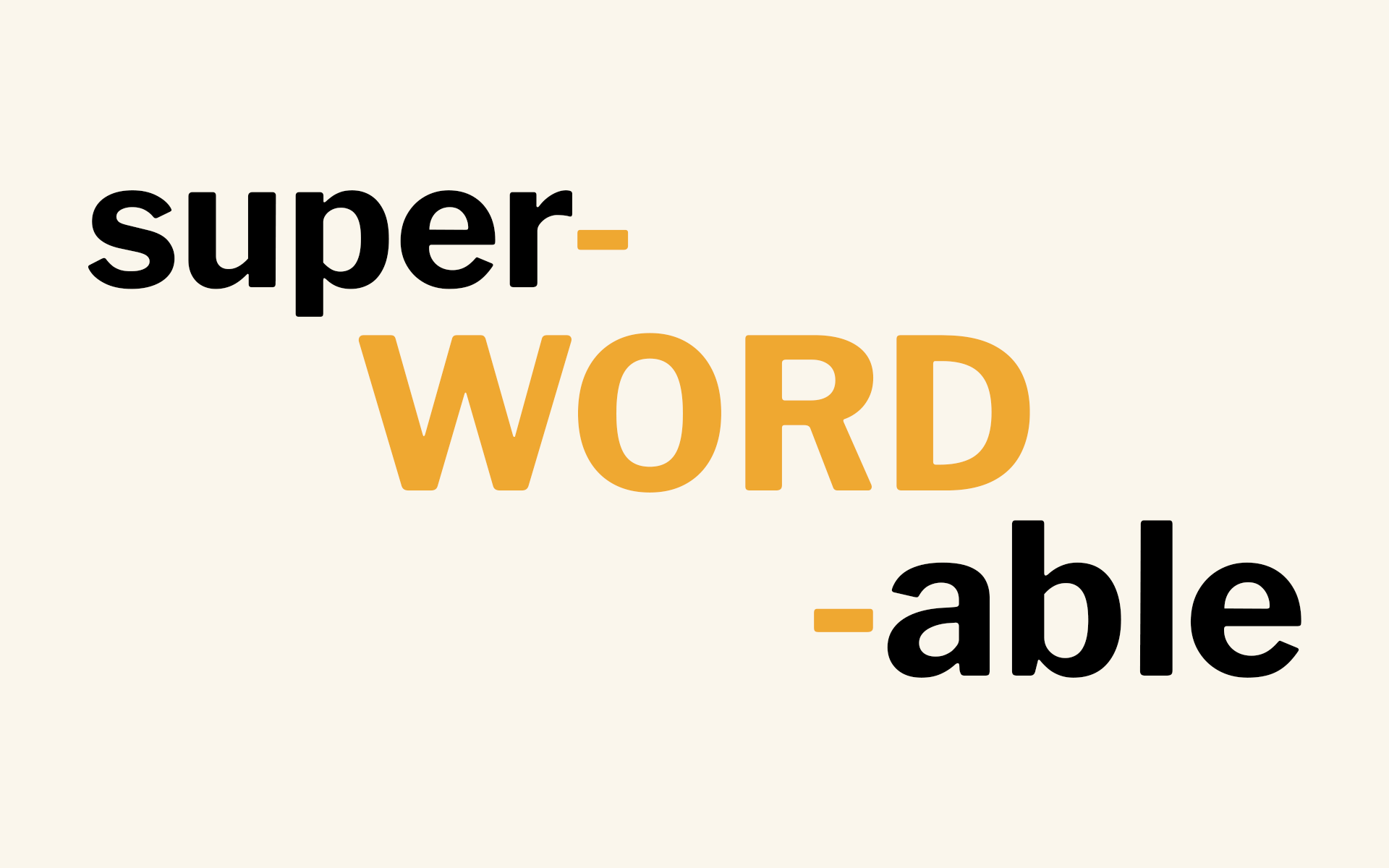
superWORDable

Idea to a live product in a weekend. A word-game concept, taken from nothing to a tested game engine, a brand, a marketing site, and self-deploying infrastructure — about 36 hours of work across two days. The game balance was tuned against a Monte-Carlo simulator, not guesswork.

  • ~36 hours
  • React Native
  • AWS
  • Tested engine
See it live

Hard — the deep build

Dynamic Train Labs

A six-domain AI platform, built solo. A physics-accurate locomotive simulator, a reinforcement-learning pipeline that trains an AI to drive against that exact physics, a C++ desktop app, and a full multi-tenant B2B platform on AWS — roughly 116,000 lines, architected and built end to end by one person. The kind of thing most teams split across specialists.

  • ~116k LOC
  • C++ · Python · TS
  • RL / ONNX
  • Live on AWS
See it live

The long way here

I didn't start as an engineer. I ended up one.

I started as a 3D artist — modeling, texturing, lighting, the craft of making something look like it belongs. Then I spent seventeen years at a simulation company, where I went from building the art to leading production on more than fifty large, technical projects, wrangling teams of artists, developers, and specialists through the whole messy lifecycle.

The catalyst was a bug. For a long stretch I had to live with a severe defect in the software every single day — and every time I raised it, the answer was the same: impossible. A feature I wanted? Impossible. An idea I had? Impossible, for one invented reason or another. After a while it was clear "impossible" didn't mean can't — it meant won't: nobody wanted to do the work, or sit down and reason through it. Being expected to just accept that was the part I couldn't stomach.

So I taught myself to program — Python, then C++, then whatever the problem demanded — and fixed it myself.

The thing I'm chasing is the same now as it was at the start: the moment a half-formed idea suddenly runs on a screen. Now I build entire products on my own, using modern AI tooling to move at a pace that used to take a whole team. The art training never left, either — I can make a thing work and make it feel like something, which turns out to be a rarer combination than it should be. And I still hear "that can't be done" as a starting line, not a stop sign.

  1. ’05–’07 3D Artist Computer animation degree, then modeling & rendering for client work.
  2. ’08–’25 From artist to production lead 50+ technical simulation projects; teams of 8–15; full lifecycle delivery.
  3. Along the way Self-taught engineering Taught myself to fix what others called unfixable — Python, C++, the rest.
  4. Now Solo full-stack builder Whole products, end to end, AI-assisted — from idea to deployed.

The kinds of things I make

Range, without the buzzword soup.

01

Whole products, end to end

From the idea on a napkin to a deployed, tested thing people can actually use — frontend, backend, and the deploy pipeline that ships it.

02

AI/ML & simulation

Physics engines, reinforcement-learning pipelines, and training/evaluation systems built so the numbers you trust match how the thing behaves when it ships.

03

Cloud & the plumbing

AWS, infrastructure-as-code, CI/CD that deploys itself with no secrets lying around. The boring, reliable parts, done right.

04

The visual side

I came up as a 3D artist, so I can shape how a product looks and feels — brand, UI, real-time 3D — not just whether it compiles.

For the people who scan for keywords: C++, Rust, Python, TypeScript/React, AWS (Terraform, Lambda, Cognito), Docker, reinforcement learning (PPO, Stable-Baselines3, ONNX), MCP servers & agentic workflows, and a full 3D toolchain (Maya, Blender) when a project calls for it.

Is this a fit?

If one of these is you, let's talk.

An AI/ML idea that needs to become real

You know what you want the system to do. You need someone to actually make it do it.

A hard system nobody wants to own

Multi-domain, a little scary, the kind of thing that needs one head holding all of it.

A prototype that has to be fast — and not embarrassing

Something real for users, a pitch, or validation, built well enough to keep.

Tell me what you're building.

me@alexlouis.dev

No form, no funnel. It goes straight to me.